Call To Order

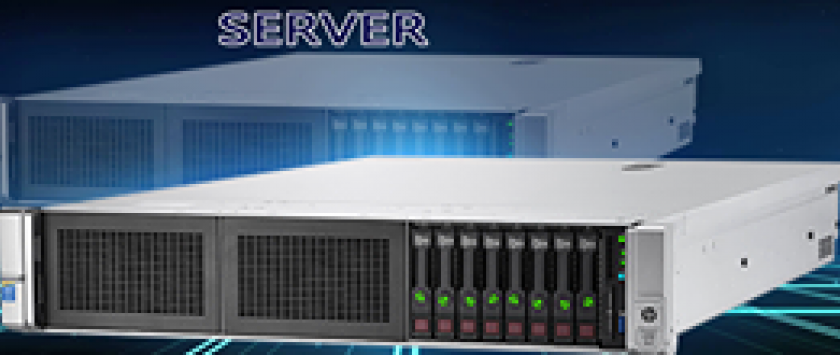
A server is a computer designed to process requests and deliver data to another computer over the internet or a local network.
The word "server" is understood by most to mean a web server where webpages can be accessed over the internet through a client like a web browser. However, there are several types of servers, including local ones like file servers that store data within an intranet network.
Although any computer running the necessary software can function as a server, the most typical use of the word references the enormous, high-powered machines that function as the pumps pushing and pulling data from the internet.
Most computer networks support one or more servers that handle specialized tasks. As a rule, the larger the network in terms of clients that connect to it or the amount of data that it moves, the more likely it is that several servers play a role, each dedicated to a specific purpose.
Strictly speaking, the server is the software that handles a specific task. However, the powerful hardware that supports this software is also usually called a server because server software coordinating a network of hundreds or thousands of clients requires hardware much more robust than what you'd buy for ordinary consumer use.
Server Hardware
One of the best choices for a small business is a dedicated server built from the ground up as a file server to provide features and expansion options that a desktop computer lacks. Before investing in server hardware, you need to consider many things including the server operating system, applications, storage, processor, form factor, memory and more to help you choose wisely.
Choose the Right Server for Your Needs
The big names in the server market are Dell, Fujitsu, HP, IBM, Lenovo, and Oracle. Choosing the right server depends in large measure on the applications you intend to run on it. If all you need is file sharing, automated client backup, and light-duty remote access for PCs (typically ten or fewer), consider a NAS or even a Windows Home Server machine; HP, Netgear, QNAP, Seagate, and Synology are the major players in this arena. If your business has more than ten employees using computers, if you need to operate an email or print server, manage a complex database, or run sophisticated server-based applications (such as ERP or CRM), if you have very large storage requirements, or if you require large-scale virtualization capabilities, you’ll want a more robust option such as a tower, rack, or blade server.
Types of servers
Servers are often categorized in terms of their purpose. A Web server, for example, is a computer program that serves requested HTML pages or files. The program that is requesting web content is called a client. For example, aWeb browser is a client that requests HTML files from Web servers.
Here are a few other types of servers, among a great number of other possibilities:
- Web server
Web servers are computers that deliver (or serve up) Web pages. Every Web server has an IP address and possibly a domain name. There are many Web server software applications, including public domain software and commercial packages.
- Proxy server
A proxy server is a server that sits between a client application, such as a Web browser, and a real server. Proxy servers have two main purposes: to improve performance and to filter requests.
- Dedicated server
A dedicated server is a single computer in a network reserved for serving the needs of the network. For example, some networks require that one computer be set aside to manage communications between all the other computers.
- A policy server
Its a security component of a policy-based network that provides authorization services and facilitates tracking and control of files.
- A blade server
Its a server chassis housing multiple thin, modular electronic circuit boards, known as server blades. Each blade is a server in its own right, often dedicated to a single application.
Server Clusters
The word cluster is used broadly in computer networking to refer to an implementation of shared computing resources. Typically, a cluster integrates the resources of two or more computing devices that could otherwise function separately for some common purpose (often a workstation or server device).
A web server farm is a collection of networked web servers, each with access to content on the same site. They function as a cluster conceptually. However, purists debate the technical classification of a server farm as a cluster, depending on the details of the hardware and software configuration.
Kindly click on the link or the image below to place your order
https://www.deluxe.com.ng/product-category/servers
www.deluxe.com.ng
Category